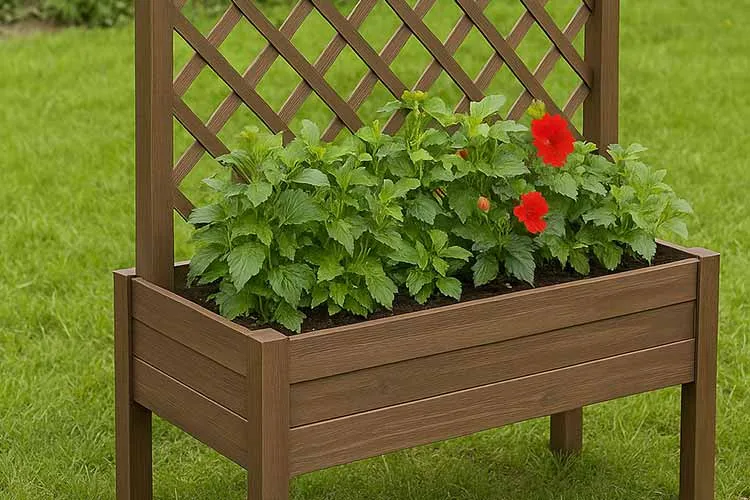
If you’re short on space or want to keep your garden more organized, garden raised beds that come with built-in trellises might be exactly what you need. These combo setups let you grow upward instead of out, which is ideal for climbing veggies like tomatoes, beans, and cucumbers.
They’re especially handy for anyone working with a small patio, narrow yard, or urban balcony. Whether you’re a beginner planting your first vegetable patch or a weekend DIY gardener looking to streamline your setup, these raised beds help you get more from every square foot.
In this post, we’ll look at the best raised beds with integrated trellises, answer common questions, and help you find the right setup for your space and growing goals.
Why Choose a Raised Bed With a Built-In Trellis?
Using a raised bed with a built-in trellis solves a handful of problems at once. You get better drainage, less bending while planting, and extra vertical space to grow climbing plants. That’s a big deal for smaller yards or tight garden rows where spreading vines would normally eat up your growing area. Trellised beds also improve airflow around your plants, which helps prevent fungal issues and makes harvesting much easier—no more hunting for cucumbers in a tangled mess of vines.
So, how do you choose a trellis? Focus on the height (4–6 feet is common), material (metal is more durable, but wood blends better with garden aesthetics), and the type of plant you want to support. Some setups are better suited for heavier vines, such as tomatoes or squash, while others are ideal for lighter crops like peas and beans.
What supports a garden trellis best? Stability comes from anchoring—either into the soil, the raised bed frame, or using fence lines. Look for models with built-in supports or cross-bracing to prevent tipping or bowing as plants grow.
5 Best Garden Raised Beds That Come With Built-In Trellises
Zhongma Raised Garden Bed with Trellis

This sturdy wooden raised bed features a high trellis that is ideal for growing cucumbers, beans, and climbing flowers. Its built-in drainage system helps keep roots from getting soggy, which is great if your area sees heavy rain. The natural wood finish adds a clean, rustic look that blends into most backyard spaces.
- Pros: Solid wood construction, tall trellis (over 5 feet), decent depth for root veggies
- Cons: Assembly takes time; wood may need sealing to prevent weathering
- Ideal for: Gardeners growing fast-climbing crops in a small yard or along a sunny fence line
Dimensions: 31.5″ L x 15.7″ W x 59″ H
Trellis Height: 47 inches
Best Vegetable Match: Pole beans, cucumbers
Material: Fir wood
Recommended Use: Small backyards, patios with decent sunlight
VIVOHOME Raised Bed with Trellis

If you’re looking for a compact but highly functional option, this free-standing plastic raised bed from VIVOHOME is a solid pick. The BPA-free resin is light but tough, and the trellis is tall enough for climbing peas or small tomatoes. There’s even a built-in water reservoir to prevent overwatering.
- Pros: Lightweight, easy to clean, self-watering design
- Cons: Trellis is better for light plants; not ideal for heavy vine crops
- Ideal for: Beginners or renters who need a movable, low-maintenance setup
Dimensions: 24.6″ L x 10.4″ W x 47.6″ H
Trellis Height: 37 inches
Best Vegetable Match: Snap peas, cherry tomatoes
Material: BPA-free plastic
Recommended Use: Balconies, patios, indoor sunrooms
Outsunny Freestanding Raised Bed with Trellis

Made with a powder-coated steel frame, the Outsunny bed offers strength and longevity. The raised box holds a decent volume of soil and is supported by a tall, integrated trellis perfect for heavy climbers like squash or tomato vines. Drainage holes are pre-drilled, and the bed height keeps critters at bay.
- Pros: Very durable, strong frame, great height for vertical growth
- Cons: Slightly heavier; may need to anchor in windy areas
- Ideal for: More serious growers tackling heavier crops
Dimensions: 31.5″ L x 15.75″ W x 61″ H
Trellis Height: 48 inches
Best Vegetable Match: Tomatoes, small melons
Material: Metal frame with plastic panels
Recommended Use: Open yards, community gardens
Urban Patios Raised Planter

Sleek and modern, this raised planter from Trellies is both decorative and practical. It features a minimalist black frame with a thin-profile trellis ideal for lighter crops. It’s easy to assemble, and the narrow design fits nicely along a wall or balcony rail.
- Pros: Slim fit, sleek design, easy setup
- Cons: Not great for deep-rooted plants or heavy vines
- Ideal for: Urban patios, balconies, and aesthetic-focused gardeners
Dimensions: 29″ L x 11.5″ W x 60″ H
Trellis Height: 44 inches
Best Vegetable Match: Sugar snap peas, nasturtiums
Material: Powder-coated steel
Recommended Use: Small-space gardening, balconies
Giantex Raised Garden Bed with Trellis
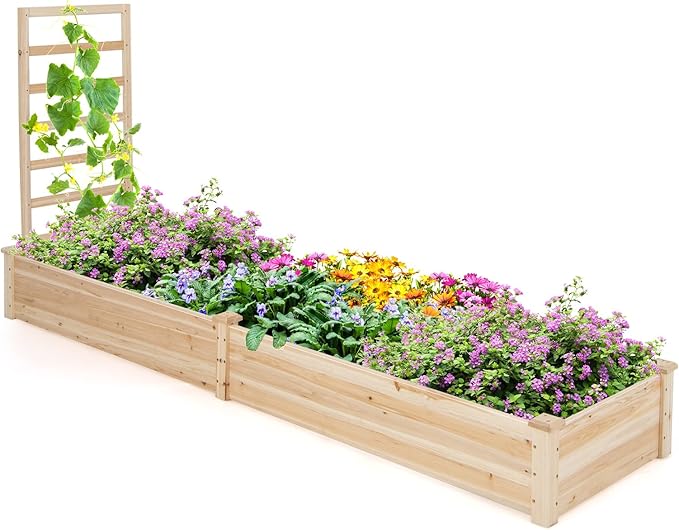
The Giantex model combines solid volume and trellis height, making it a favorite among serious home growers. With a large planting area and thick side panels, it handles both flowers and vegetables equally well. Its sturdy frame prevents bowing even when fully loaded.
- Pros: Wide planting box, very stable, nice for dual crops
- Cons: Takes two people to assemble
- Ideal for: Home gardeners wanting a long-term setup with room to rotate crops
Dimensions: 35.5″ L x 16″ W x 61″ H
Trellis Height: 48 inches
Best Vegetable Match: Cucumbers, cherry tomatoes, beans
Material: Fir wood and galvanized steel
Recommended Use: Full-sun backyard plots, multi-season planting
7 Vegetables That Thrive on a Trellis
Using a trellis in your raised bed gives you more space and healthier plants, especially when you grow veggies that naturally want to climb. If you’re wondering what the best vegetable to grow on a trellis is, here are seven reliable choices that make the most of vertical growing:
- Pole Beans: One of the easiest climbers. They grow rapidly and produce abundantly with minimal effort.
- Cucumbers: Prefer to climb. Growing vertically helps keep the fruit cleaner and improves airflow, reducing mildew.
- Peas (Snap or Snow): Lightweight vines that thrive on mesh or net-style trellises. Bonus: no need to bend when harvesting.
- Tomatoes: Indeterminate varieties love a tall support. Trellising enhances sunlight exposure and simplifies pruning.
- Zucchini (Vining Types): Some zucchini can climb, especially smaller varieties. Tie them in early for support.
- Melons (Mini Varieties): Compact types like ‘Minnesota Midget’ or ‘Sugar Baby’ do well with support and some netting for fruit.
- Squash (Climbing Varieties): Delicata and acorn types can be trained upward with strong anchoring.
Stick with varieties labeled “vining” or “indeterminate” for best results. Avoid bush types—they’re better suited for lower, wider beds.
Do Cucumbers Really Need a Trellis in a Raised Bed?
Yes—cucumbers benefit greatly from a trellis in a raised bed. Without one, they sprawl and take up precious soil space, making it harder to manage pests, water properly, or find ripe fruit. When grown vertically, cucumbers stay off the soil, which reduces rot and keeps the fruit cleaner.
You also get better air circulation through the vines, which cuts down on powdery mildew and boosts overall plant health. Trellised cucumbers tend to produce straighter, more uniform fruit, and harvesting becomes much easier—pluck from eye level. For compact beds, trellising cucumbers is a smart, efficient move.
Trellis vs. Lattice: What’s the Real Difference?
If you’re trying to decide between a trellis and a lattice for your raised bed, it helps to understand how they function in the garden. While the terms are sometimes used interchangeably, they serve different purposes.
A trellis is typically a vertical structure made from metal, wood, or plastic, with spaced bars or grids for climbing plants. It’s designed specifically to support plant growth upward—ideal for vegetables like peas, cucumbers, and pole beans. Trellises often come with sturdier frames and can be freestanding or attached directly to your raised bed.
A lattice, on the other hand, is a crisscrossed panel often used as a decorative screen or backdrop. It can support plants, but may not be strong enough for heavy climbers unless reinforced. Lattices are better suited for lightweight vines or for dividing garden sections.
| Feature | Trellis | Lattice |
|---|---|---|
| Purpose | Plant support | Decorative + light plant support |
| Strength | High (supports heavy crops) | Medium (may need reinforcement) |
| Common Use | Vertical vegetable growing | Screening or aesthetic backdrops |
| Material | Metal, wood, plastic | Usually wood or vinyl |
| Best for | Tomatoes, cucumbers, pole beans | Sweet peas, morning glories, ivy |
If you’re growing food, go with a true trellis. If it’s just light vines or visual interest you want, a lattice will do the job—keep plant weight in mind.
What’s the Maximum Height for a Trellis?
The best height for a garden trellis depends on what you’re growing and where you’re placing it. For most vegetables, such as pole beans, peas, and indeterminate tomatoes, a height of 5 to 6 feet is a practical range. It gives enough space for full growth without making harvesting a chore. Go taller only if you’re training vigorous climbers and have easy access to a ladder or raised platform.
Also consider local wind patterns and bylaws, especially in suburban neighborhoods. A 6-foot trellis may require anchoring or bracing in windy areas. If your bed is already elevated, you might want to keep the trellis shorter for stability. In tight spaces, even a 4-foot trellis can make a big difference in maximizing your vertical growing area.
Which Direction Should a Garden Trellis Face for Best Growth?
Trellis direction plays a significant role in plant health that many gardeners may not be aware of. South or southeast-facing trellises work best in most climates, as they allow your plants to soak up morning and midday sun. That’s key for vegetables like tomatoes and cucumbers, which need plenty of light to produce fruit and stay disease-free.
If your space is limited—like a narrow side yard or urban balcony—consider how shadows fall throughout the day. East-facing trellises can still work well for cool-season crops like peas, while west-facing trellises may lead to heat stress during summer afternoons. Wind matters too: avoid placing your trellis where strong gusts hit broad leaves directly. A sheltered, sunlit spot is ideal for steady, healthy growth.
Attaching a Trellis to Any Planter?
Yes, you can attach a trellis to most planters, but you’ll want to match the support style to your container material. Wooden planters are the easiest—screw or bolt the trellis into the side panels using galvanized hardware. For plastic or resin beds, use zip ties, clamps, or brackets to avoid cracking the material. Avoid leaning heavy trellises against lightweight planters without anchoring them.
If your planter is small or shallow, consider a free-standing trellis placed behind it, staked into the ground, or a weighted base. Always check for tipping risk, especially on windy patios. Add cross-bracing or anchor posts if needed. A secure attachment not only protects your plants but also keeps the trellis upright through storms or overgrowth.
How to Support a Garden Trellis So It Won’t Fall Over
Keeping your trellis upright requires more than just placing it in the soil—support is crucial, especially once plants start climbing and the wind picks up. For in-ground beds, drive rebar or wooden stakes 12–18 inches into the soil and zip-tie or screw the trellis frame to them. If your trellis is part of a raised bed, attach it directly to the bed frame using corner brackets or deck screws.
Freestanding trellises need extra weight—sandbags, concrete blocks, or heavy planters work well as base stabilizers. You can also anchor them to nearby fences or walls with hooks or eye screws. Avoid flimsy connections or loose soil bases. A well-secured trellis means less mid-season fixing and fewer snapped vines when storms roll through.