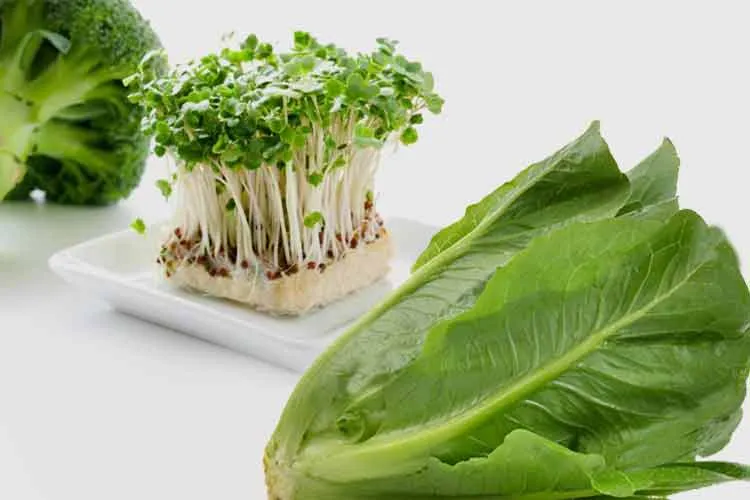
Are microgreens better than Romaine lettuce? Nutrient density matters when choosing between broccoli microgreens and romaine lettuce. Broccoli microgreens contain up to 40 times more nutrients than their mature counterparts, making them a powerhouse of vitamins and antioxidants.
On the other hand, Romaine is a hydrating, low-calorie green packed with vitamin A and folate. While both are rich in vitamin K and fiber, broccoli microgreens provide significantly more vitamin C, iron, and sulforaphane, a potent compound linked to cancer prevention.
If you want to maximize nutrition per bite, the choice isn’t as simple as “greens are healthy.” This breakdown will show you exactly how these two compare, helping you decide which one belongs on your plate for the most health benefits.
Nutritional Breakdown of Broccoli Microgreens
Despite their small size, broccoli microgreens are packed with essential macronutrients. A 100-gram serving contains around 7 grams of carbohydrates, most of which come from fiber. The fiber content is roughly 3-4 grams, aiding digestion and promoting gut health. Microgreens have a more concentrated nutrient profile in a smaller volume than mature broccoli.
The protein levels of leafy greens are impressive for a leafy green, providing about 3-4 grams per 100 grams. This makes them a great addition to plant-based diets. While they don’t match the protein content of legumes or nuts, they still contribute to daily intake. Their low-fat content, around 0.5 grams per 100 grams, ensures they remain a light, nutritious option without unnecessary calories.
Vitamins and Minerals
Broccoli microgreens are especially rich in vitamin C, providing over 90 mg per 100 grams, far exceeding the recommended daily intake. This antioxidant supports the immune system and helps with collagen production. They also contain high amounts of vitamin K1, with around 100-200 mcg per serving, essential for blood clotting and bone health.
Another standout nutrient is vitamin A, mostly in the form of beta-carotene. These microgreens also provide folate (around 60 mcg per 100 grams), vitamin E (about 1.5 mg), and B vitamins, contributing to energy metabolism.
Mineral content is just as impressive. Calcium (50-70 mg per 100 grams) helps with bone strength, while iron (around 1 mg per 100 grams) supports red blood cell production. They also contain magnesium (25-30 mg), potassium (300-350 mg), and zinc (0.5 mg), contributing to muscle function, nerve health, and immune support.
One of the most unique aspects of broccoli microgreens is their high sulforaphane content, a compound known for its potential anti-cancer and anti-inflammatory properties. Studies suggest these young greens contain significantly higher sulforaphane levels than mature broccoli.
Caloric Content
Broccoli microgreens are very low in calories, providing around 35-40 calories per 100 grams. This makes them an excellent meal addition for those looking to boost nutrition without significantly increasing calorie intake.
Nutritional Breakdown of Romaine Lettuce
Romaine lettuce is known for being light yet nutritious. A 100-gram serving contains about 3.3 grams of carbohydrates, primarily from fiber. The fiber content is around 2 grams per 100 grams, which helps with digestion and gut health. While it has slightly less fiber than broccoli microgreens, it still contributes to daily intake.
Protein content in romaine is about 1-1.5 grams per 100 grams, which is lower than broccoli microgreens but still beneficial as part of a balanced diet. The fat content is minimal, at around 0.3 grams per 100 grams, making it a low-calorie option suitable for weight-conscious diets. Although it doesn’t provide high macronutrients, romaine is valued for its micronutrient content and hydration benefits.
Vitamins and Minerals
Romaine lettuce is an excellent source of vitamin K, offering about 100-120 mcg per 100 grams. This vitamin supports blood clotting and bone health. It also provides a decent amount of vitamin A (about 8700 IU per 100 grams) in the form of beta-carotene, which is essential for vision and immune function.
Vitamin C levels are moderate, with about 4-6 mg per 100 grams, significantly lower than broccoli microgreens but still beneficial for immune health. Romaine also contains folate (about 136 mcg per 100 grams), vitamin B6 (0.1 mg), and small amounts of vitamin E, all contributing to energy metabolism and cell function.
Among minerals, potassium is the most abundant, providing around 250-300 mg per 100 grams. It helps regulate blood pressure and muscle function. In smaller amounts, romaine lettuce contains calcium (33 mg), magnesium (14 mg), phosphorus (30 mg), and iron (0.9 mg), supporting overall health. While its mineral content isn’t as concentrated as broccoli microgreens, romaine lettuce remains nutritious.
Caloric Content
Romaine lettuce is extremely low in calories, containing only 17-20 calories per 100 grams. This makes it one of the best leafy greens for those looking to increase their nutrient intake without adding extra calories to their meals.
Head-to-Head Comparison (Per 100g): Broccoli Microgreens vs. Romaine Lettuce
| Nutrient | Broccoli Microgreens | Romaine Lettuce |
|---|---|---|
| Calories | 35-40 kcal | 17-20 kcal |
| Carbohydrates | 7 g | 3.3 g |
| Fiber | 3-4 g | 2 g |
| Protein | 3-4 g | 1-1.5 g |
| Vitamin C | 90+ mg | 4-6 mg |
| Vitamin A | Varies (lower than romaine) | ~8700 IU |
| Vitamin K | 100-200 mcg | 100-120 mcg |
| Folate (B9) | ~60 mcg | 136 mcg |
Macronutrient Comparison (Protein, Fiber, Carbs)
Broccoli microgreens have a higher protein content than romaine lettuce, offering 3-4 grams per 100 grams, compared to romaine’s 1-1.5 grams. This makes them a better choice for increasing plant-based protein intake.
Regarding fiber, broccoli microgreens contain 3-4 grams per 100 grams, while romaine provides about 2 grams. Although both support digestion and gut health, broccoli microgreens offer a slightly stronger boost in fiber.
Broccoli microgreens contain slightly more carbohydrates per 100 grams than romaine, which has 3.3 grams. However, since most carbohydrates come from fiber, both remain low-carb options.
Vitamin and Mineral Comparison
Broccoli microgreens are much higher in vitamin C than romaine lettuce, with over 90 mg per 100 grams, compared to 4-6 mg for romaine. This makes broccoli microgreens a much stronger immune booster.
Both greens provide high amounts of vitamin K. Romaine has 100-120 mcg per 100 grams, while broccoli microgreens can range from 100-200 mcg. Both support bone health and blood clotting, but broccoli microgreens may have an edge.
Regarding vitamin A, romaine offers around 8700 IU per 100 grams, while broccoli microgreens provide lower amounts, depending on growing conditions. For beta-carotene intake, romaine is the better choice.
Caloric Differences
Romaine lettuce is lower in calories, providing only 17-20 calories per 100 grams, while broccoli microgreens contain 35-40 calories. Although both are very low in calories, romaine is slightly lighter.
When comparing broccoli microgreens to lettuce, it’s worth noting how they are used. Microgreens are usually eaten in smaller quantities (as a garnish or addition), whereas lettuce might form the base of a salad. Microgreens have more nutrients ounce-for-ounce, but you might eat several ounces of lettuce in a salad versus perhaps a half-ounce of microgreens as a topping.
For example, topping a salad or sandwich with a handful of broccoli microgreens will significantly boost its vitamin and antioxidant content, but microgreens alone won’t provide a lot of bulk. Ideally, you don’t have to choose one or the other – combining them is best. Use lettuce for volume and fiber, and add microgreens for a nutrient and flavor boost. This way, you benefit from the “tiny but mighty” microgreens while still enjoying the filling nature of lettuce. Health experts recommend including both: a variety of greens ensures you get a broad spectrum of nutrients.
Helpful Microgreen Facts & Advice
How to Grow Sunflower Sprouts Microgreens
Must-Have Supplies for Growing Microgreens at Home
Growing Microgreens? Here Are the Questions Everyone Asks!
7 Protein-Rich Sprouts You Can Grow at Home