Mulching tomato plants offers a simple yet powerful way to boost their growth and health. It works wonders by improving soil fertility, retaining moisture, regulating soil temperature, and keeping weeds at bay. This creates the perfect environment for robust tomato plants that yield an abundant harvest.
There are two primary types of mulch: organic and inorganic. Organic options like straw, grass clippings, and shredded leaves break down over time, enriching the soil naturally. Inorganic mulches, such as plastic sheeting, focus on durability and weed control. By choosing sustainable mulching practices, gardeners can enhance their tomato plants’ growth while caring for the environment.
Let’s explore how to select the best mulch for tomato plants and unlock the benefits of mulching tomatoes!
The Benefits of Mulching Tomato Plants
Mulching your tomato plants offers numerous advantages that directly contribute to their health and productivity.
First, mulch is excellent for retaining soil moisture and regulating soil temperature, which are critical for tomatoes. A consistent moisture level prevents stress that can lead to issues like blossom-end rot, while stable temperatures protect the roots during hot or cool spells.
Mulch also helps prevent soil erosion by reducing water runoff and protecting the soil surface. Organic mulch options, like shredded leaves or compost, gradually decompose, adding nutrients that improve soil fertility over time.
Another key benefit is weed suppression. A thick mulch layer blocks sunlight, preventing weeds from sprouting and reducing the time spent on maintenance.
Ultimately, mulching enhances the overall growth and health of tomato plants. By creating an ideal growing environment, it encourages strong root systems and vigorous development, leading to better yields. Whether you’re using mulch to retain soil moisture, regulate temperature, or improve fertility, it’s a must-have tool for thriving tomatoes.
Top Mulch Options for Tomato Plants
Choosing the right mulch for your tomatoes can make all the difference in their health and productivity. Below, we’ll explore some of the best organic mulch options and how they benefit your garden.
Straw Mulch for Tomatoes
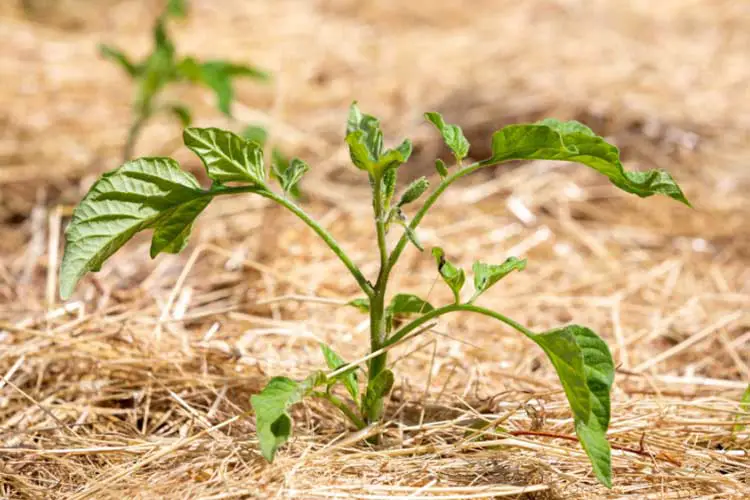
Straw is a popular choice for its light weight and effectiveness at suppressing weeds. Spread a 2–3-inch layer of straw around your plants to keep the soil moist and prevent weed growth. It’s easy to apply and allows water to penetrate the soil while insulating roots from extreme heat or cold. Be sure to use clean, seed-free straw to avoid introducing weeds.
Grass Clippings as Mulch
Grass clippings are a readily available and nutrient-rich mulch option. They’re packed with nitrogen, which can give your plants a nutritional boost as they decompose. Apply a thin layer of dried clippings (no more than 1 inch thick) to prevent matting and odor. Avoid using clippings treated with chemicals, as they can harm your plants.
Wood Chips for Tomato Plants
Wood chips are excellent for moisture retention and long-term weed suppression. They break down slowly, making them a durable choice for gardens. Spread a 2-inch layer around your tomatoes, keeping a gap near the stem to prevent rot. Wood chips are ideal for gardeners who want a low-maintenance option that lasts all season.
Shredded Leaves as Mulch
Eco-conscious gardeners love shredded leaves for their affordability and nutrient content. As they decompose, leaves add organic matter to the soil, enriching its fertility. They also create a natural barrier to weeds and help retain moisture. To use shredded leaves effectively, ensure they’re dry and evenly spread in a 2–3-inch layer.
Compost Mulch Benefits
Compost is a powerhouse mulch that not only locks in moisture but also provides a steady supply of nutrients. It’s perfect for feeding heavy-feeding plants like tomatoes. Apply a 2-inch layer of well-decomposed compost around your plants, taking care not to let it touch the stems to avoid disease. Compost mulch enhances both soil fertility and plant growth simultaneously.
Pine Needles for Mulching
Pine needles are an underrated but excellent choice for tomato plants. They create a natural mulch layer that helps regulate soil temperature, retain moisture, and deter weeds. Pine needles are slightly acidic, making them a great option if your soil needs pH adjustment. Spread them in a thin layer to allow water penetration while protecting the soil surface.
When and How to Mulch Tomatoes
Mulching your tomato plants at the right time and using proper techniques ensures maximum benefits while preventing common issues. Here’s a simple guide to get you started.
When to Mulch Tomato Plants
The best time to mulch tomatoes is after the soil has warmed up in late spring or early summer. Applying mulch too early, when the ground is still cool, can slow down growth by keeping the soil temperature too low. Wait until your tomato plants are established—about 2–4 weeks after transplanting—before adding mulch.
How to Mulch Tomatoes
Follow these steps to apply mulch effectively around your tomato plants:
- Prepare the Soil: Before mulching, weed the area thoroughly and water the soil. Mulch works best on moist, weed-free ground.
- Choose the Right Thickness: Apply a layer of mulch that is 2–3 inches thick. This is enough to retain moisture and suppress weeds without causing air circulation issues.
- Leave Space Around the Stems: Keep the mulch 1–2 inches away from the base of the tomato stems. This prevents rot, fungal diseases, and pest infestations.
- Spread Evenly: Distribute the mulch evenly around the plant, extending the layer to cover the root zone.
Common Mulching Mistakes to Avoid
While mulching is highly beneficial for tomato plants, certain mistakes can hinder their growth or cause problems. Here are some common pitfalls to watch out for, along with tips to avoid them:
Over-Mulching
Applying too much mulch can trap excess moisture in the soil, leading to root rot and fungal diseases. Stick to the recommended thickness of 2–3 inches to maintain proper moisture levels and airflow.
Using Fresh Grass Clippings
While grass clippings are a great organic mulch, using them fresh can create a dense, compact layer that blocks air and water. Fresh clippings can also heat up as they decompose, potentially damaging the plants. Always let grass clippings dry before applying them as mulch.
Placing Mulch Too Close to Stems
Mulch piled directly against the stems of tomato plants can trap moisture, creating a breeding ground for rot and pests. Keep mulch at least 1–2 inches away from the base of the plant to prevent these issues.
Choosing the Wrong Materials
Avoid using mulch that may contain chemicals or weed seeds, such as non-composted straw or treated grass clippings. Opt for clean, natural materials to ensure the health of your plants and soil.
By keeping these mulching tips for gardeners in mind, you’ll steer clear of common mistakes and enjoy the full benefits of mulching tomatoes. Careful application is key to avoiding mulch-related diseases and promoting healthy plant growth.
Maintaining Mulch Throughout the Season
Over time, organic mulch breaks down, reducing its ability to suppress weeds and lock in moisture. Regularly refreshing it with a 2–3 inch layer can keep your plants happy and your soil healthy. Plus, adjusting for weather—loosening during rain or thickening in dry spells—can make a big difference.
Refreshing Mulch Layers
Organic mulches, such as straw, grass clippings, and shredded leaves, decompose over time, enriching the soil. However, as they break down, their effectiveness at weed suppression and moisture retention diminishes. Check your mulch regularly and add a fresh layer to maintain the recommended thickness of 2–3 inches.
Adjusting for Weather Conditions
Seasonal weather changes can affect how mulch performs. During prolonged rainy periods, consider loosening or thinning mulch to prevent waterlogging and fungal growth. In dry spells, ensure the mulch layer is thick enough to retain moisture and protect the soil from cracking.
Monitoring for Pests or Diseases
Keep an eye out for signs of pest activity or disease near the mulch. Slugs, for example, can sometimes hide in moist organic mulches. If pests become an issue, remove affected mulch and replace it with a lighter material, such as pine needles or compost.
Choosing the Right Mulch for Your Garden
Selecting the best mulch for tomato plants depends on several factors, including your garden’s needs, climate, and the materials you have available. Here’s a guide to help you make the right choice.
Cost-Effectiveness and Availability
If budget and convenience are priorities, look for locally available materials like straw, grass clippings, or shredded leaves. These organic options are affordable, easy to source, and beneficial for the soil as they decompose.
Organic vs. Inorganic Mulch
Organic mulches, such as compost, straw, or pine needles, break down over time, improving soil fertility and structure. They are ideal for gardeners looking to nurture their soil naturally. Inorganic mulches, like plastic sheeting, are durable and excellent for weed suppression but don’t add nutrients to the soil. Choose based on your long-term goals—organic for soil enrichment, inorganic for low-maintenance weed control.
Climate and Garden Type
Consider your local weather conditions. For hot climates, mulches like wood chips or straw provide excellent insulation, keeping the soil cool and moist. In cooler areas, compost or black plastic mulch can help warm the soil and extend the growing season. For raised beds or compact gardens, lighter materials like shredded leaves or grass clippings are easy to manage.
Special Considerations
If your soil needs specific adjustments, some mulches offer unique benefits. For example, pine needles slightly acidify the soil, making them ideal for tomatoes in alkaline areas. Compost is a great choice for nutrient-poor soils, while wood chips provide long-term moisture retention.
Once comparing mulch materials for specific climates and garden types, you’ll find cost-effective mulching solutions that align with your gardening goals. Whether you prefer organic mulch options or are considering inorganic vs. organic mulch, the right choice will set your tomato plants up for success.
Conclusion
Mulching is one of the simplest yet most effective ways to grow thriving tomato plants. Once you improve soil fertility, retain moisture, regulate temperature, and suppress weeds, it will create the perfect environment for strong, productive plants.
With a range of options—from organic mulches like straw, grass clippings, and compost to inorganic solutions like plastic sheeting—you can tailor your choice to suit your garden’s unique needs. Applying mulch at the right time, using the proper thickness, and avoiding common mistakes like over-mulching or crowding stems ensures your plants stay healthy and disease-free.