Choosing the Right Peas
Not all peas are ideal for sprouting, so choosing the right variety greatly affects how well they grow. The best peas for sprouting are whole, untreated, and ideally organic. Avoid split peas or peas labeled for cooking, as they won’t germinate properly. You’ll also want to avoid peas treated with chemicals or preservatives. Look for peas sold specifically for sprouting or microgreens tested for high germination rates. Snow peas, sugar snap peas, and field peas are excellent choices, with a reliable ability to sprout quickly and grow into crisp, nutritious greens.
If you’re wondering how pea sprouts compare to other popular greens, check out our guide on Sprouts vs. Microgreens.
Best Pea Varieties for Sprouting
When it comes to sprouting, some pea varieties perform better than others. Dun peas (a type of field pea) are among the most popular choices because they sprout quickly and grow into tender, sweet greens. Speckled peas are another excellent option, producing sturdy, flavorful sprouts with a slightly nutty taste. If you prefer a milder flavor, snow peas and sugar snap peas also work well, offering delicate, crisp sprouts. No matter which variety you choose, always opt for high-quality, untreated seeds to ensure the best germination and healthiest sprouts.
Look at our Best Sprouts to Grow list for more recommendations for sprout variety.
Where to Source Quality Peas
For the best sprouting results, buy peas from reputable sources specializing in sprouting seeds or microgreens. Health food stores, garden centers, and online retailers often carry high-quality, organic, non-GMO sprouting peas. Look for seeds labeled specifically for sprouting or microgreens to ensure they are chemical-free and have a high germination rate. Some trusted brands include True Leaf Market, Johnny’s Selected Seeds, and Sprout People. If purchasing from a bulk bin or local supplier, ensure the peas are whole, untreated, and stored in a cool, dry place to maintain freshness.
1. Soaking the Peas
Soaking is the first and most important step in sprouting peas. This process wakes the dormant seeds, kick-starting germination by softening their outer coating and allowing water to penetrate. Without proper soaking, peas may sprout unevenly or not at all. Use clean, filtered water in a large bowl, as peas will expand as they absorb moisture. Once soaked, they’ll be ready for the next steps: rinsing, draining, and providing the right conditions for growth.
Why Soaking Is Essential
Peas are dry and dormant until they come into contact with moisture. Soaking jumpstarts germination by hydrating the seed and triggering enzymes that promote sprouting. This step also removes natural growth inhibitors that prevent premature sprouting. Proper soaking ensures even and healthy growth, leading to stronger sprouts.
Ideal Soaking Time
Peas should be soaked for 8 to 12 hours or overnight. They may become too soft and prone to mold if left too long. A good rule of thumb is to soak them until they nearly double in size but still feel firm. Drain them well before proceeding to the next step.
2. Rinsing and Draining
Once the peas have finished soaking, regular rinsing and proper drainage are the next steps. This keeps the sprouts hydrated while preventing mold and bacterial growth. Rinsing removes excess starch and prevents the seeds from drying out, while good drainage ensures they don’t sit in stagnant water, which can cause rot. A simple mesh strainer, sprouting jar, or tray with drainage holes keeps the peas fresh and growing.
How Often to Rinse for Optimal Growth
For best results, rinse the peas twice daily—once in the morning and again in the evening. Use cool water to wash the peas gently, then drain them thoroughly. Consistent rinsing prevents them from drying out while removing any buildup that could encourage mold or bacteria.
If you ever notice your sprouts turning yellow, you may need to adjust their moisture and light exposure. Learn more in our guide on Why Sprouts Turn Yellow.
Proper Drainage Techniques
After rinsing, drain the peas completely. Any excess water left sitting in the container can lead to spoilage. If using a jar, tilt it upside down at an angle with a mesh lid to allow full drainage. If using a sprouting tray, spread the peas out in a single layer so they don’t clump together and hold excess moisture. Keeping good airflow around the peas will also help prevent mold growth.
Providing the Right Conditions
Pea sprouts grow best when given the right temperature, airflow, and light balance. While they don’t need soil, they require a clean, well-ventilated space to thrive. Keeping them at the proper temperature and moisture level will ensure healthy, fast-growing sprouts with a crisp texture and fresh flavor.
Best Light and Temperature Settings
Pea sprouts prefer temperatures between 65°F and 75°F. Too much heat can cause them to dry out quickly or develop mold, while colder temperatures may slow germination. Place them in a spot with good airflow to prevent excess moisture buildup. When it comes to light, peas don’t need bright sunlight while sprouting—indirect or ambient light is enough to keep them growing strong.
Do Sprouts Need Sunlight?
No, pea sprouts do not require direct sunlight during the sprouting stage. They grow well in a shaded or dimly lit area. However, if you prefer greener sprouts, you can expose them to indirect light for the last 12-24 hours before harvesting. Too much sunlight too soon can dry them out or cause them to wilt, so keeping them in a low-light setting is best for most of their growth cycle.
Monitoring Growth
Observing your pea sprouts as they grow will help you spot any issues early and ensure they develop properly. Healthy sprouts should look vibrant, smell fresh, and grow steadily daily. If you notice any unpleasant odors, discoloration, or sliminess, it’s a sign that something is off and adjustments may be needed.
Signs of Healthy Sprouting
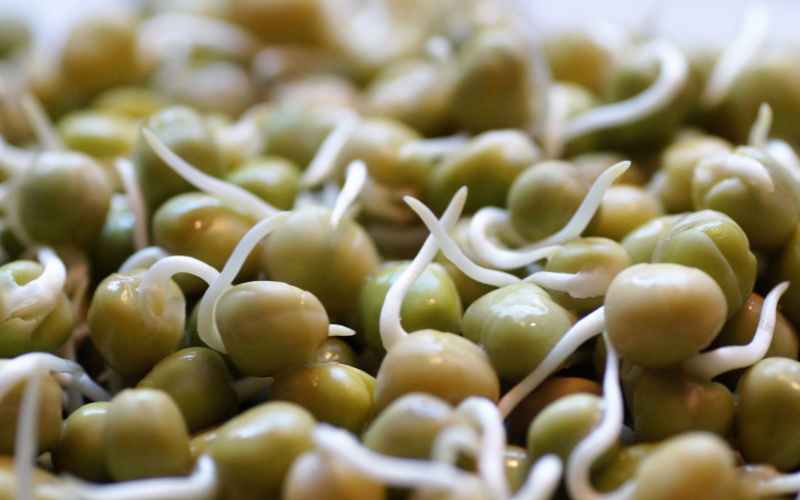
Healthy pea sprouts should be firm, crisp, and light green or pale yellow (depending on their light exposure). They will develop small root hairs, sometimes mistaken for mold, but are a normal part of sprouting. They are on the right track if they have a fresh, mild scent and continue to grow without turning mushy or slimy.
How Long Does It Take to Grow Pea Sprouts?
Pea sprouts typically take 2 to 4 days to reach an edible stage. You’ll first notice small white root tips emerging within the first 24 hours. By day three, the sprouts will be longer and more developed. If you want slightly larger sprouts, you can let them grow another day or two. Just be sure to keep rinsing and draining them properly to prevent spoilage.
Harvesting and Using Sprouts
When and How to Harvest Pea Sprouts
Pea sprouts are ready to harvest when they are 2 to 4 inches long, usually around day 3 or 4. To harvest, rinse them one last time, then gently pat them dry with a paper towel.
Can Pea Sprouts Be Eaten Raw?
Yes! Pea sprouts are safe to eat raw and contain nutrients like vitamin C, fiber, and protein. If you’re looking for more high-protein sprout options, check out our guide to Protein-Rich Sprouts.