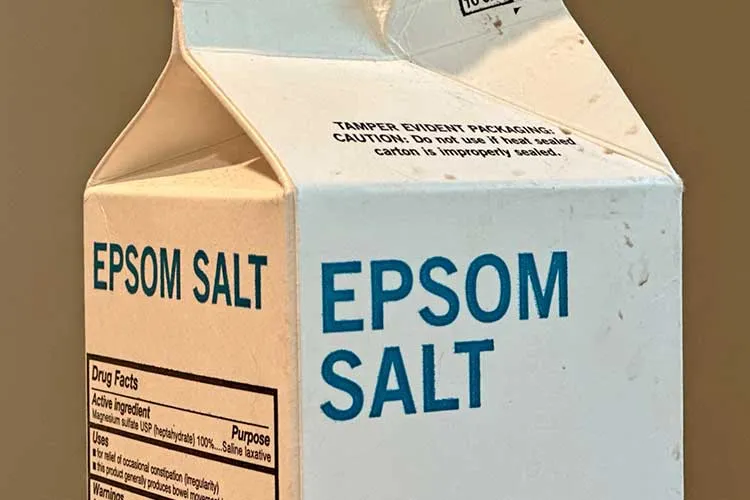
Growing healthy, productive tomatoes starts with proper nutrient care, and one popular garden remedy that often comes up is Epsom salt. But when should you use Epsom salt for tomatoes, and is it always the right solution? Epsom salt, made of magnesium sulfate, can help prevent nutrient deficiencies that lead to weak leaves and poor fruit development—but only if used correctly.
In this guide, you’ll learn how to spot magnesium deficiency in your tomato plants, how to apply Epsom salt, and when to skip it in favor of other solutions. Whether aiming for juicier tomatoes or troubleshooting leaf yellowing, this practical breakdown will help you make informed choices to grow your healthiest tomato plants.
What is Epsom Salt, and Why is it Used for Plants?
Epsom salt is a naturally occurring mineral compound made of magnesium and sulfate. Despite its name, it isn’t the same as table salt. Instead, it’s a mineral mix that dissolves easily in water and has been used in gardening and household remedies for centuries. Its popularity in the garden is largely due to its magnesium content, which plays a crucial role in plant growth.
Magnesium helps plants produce chlorophyll, the pigment responsible for photosynthesis, fuels the plant’s energy production. Without enough magnesium, plants struggle to absorb nutrients, leading to weak, discolored leaves and reduced fruit production.
The other component, sulfate, also supports healthy growth. It helps plants absorb nutrients like nitrogen and phosphorus, vital for strong stems, healthy leaves, and fruit development. Together, magnesium and sulfate support overall plant health, especially in fruiting plants like tomatoes, which demand a lot of energy and nutrients during their growing season.
A common belief among gardeners is that adding Epsom salt prevents plant problems, from poor fruiting to pest issues. While it can help when magnesium deficiency is the issue, it’s not a cure-all. Still, when used correctly, Epsom salt can be a simple way to boost your tomato plants if the soil lacks key minerals.
Identifying Magnesium Deficiency in Tomato Plants
Magnesium deficiency in tomato plants often appears as distinct yellowing between the leaf veins, known as interveinal chlorosis. The veins remain green, while the remaining leaf is yellow or pale. This discoloration typically starts on the older, lower leaves first since the plant pulls available magnesium from older growth to support new growth at the top. As the deficiency worsens, the affected leaves may curl at the edges, dry out, and eventually fall off.
The timing of these symptoms is important. Magnesium deficiency often appears during fruiting, when the plant uses large amounts of nutrients to support the development of flowers and fruit. Without enough magnesium, the plant can struggle to photosynthesize effectively, slowing fruit production and resulting in smaller, less flavorful tomatoes.
However, not all yellowing leaves point to magnesium deficiency. Overwatering, root damage, or nutrient lockout—when the plant can’t absorb nutrients due to an imbalance—can cause similar symptoms. Excessive calcium or potassium in the soil can also interfere with magnesium absorption. To narrow down the cause, check the watering routine and consider a soil test. Testing helps confirm whether magnesium levels are truly low or if another nutrient issue is at play, helping you avoid unnecessary or ineffective treatments.
When and How to Use Epsom Salt for Tomato Plants
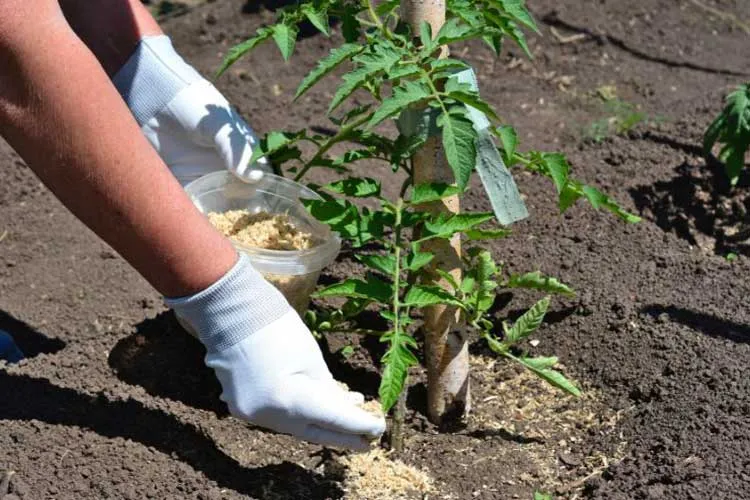
The best time to apply Epsom salt to tomato plants is during their active growing stages—especially when they begin flowering and fruiting. These are the times when the plants demand the most magnesium. If you notice signs of magnesium deficiency, such as yellowing between the leaf veins or slow fruit development, applying Epsom salt can help correct the issue. However, it’s essential to apply it correctly to avoid overuse, which can lead to other nutrient imbalances.
There are two main ways to apply Epsom salt:
1. Soil Amendment
To boost magnesium levels in the soil, mix Epsom salt into the planting hole or apply it around the base of established plants. Use about 1 tablespoon of Epsom salt per foot of plant height, mixing it gently into the top few inches of soil. Afterward, water thoroughly to help the salt dissolve and be absorbed by the roots. This method works well for ongoing maintenance but may take a little time to show results.
2. Foliar Spray
A foliar spray is an effective option for faster results. Dissolve one tablespoon of Epsom salt in a gallon of water and spray the mixture directly onto the leaves. The leaves absorb the magnesium quickly, making this a good solution for treating visible deficiencies. Spray early or late in the evening to prevent leaf burn and help the solution dry slowly. Avoid spraying during the day’s heat, which can cause more harm than good.
Moderation is key when using Epsom salt. Overapplying can lead to excess magnesium, which may interfere with calcium uptake and contribute to problems like blossom-end rot. Regularly monitoring your plants and conducting soil tests can help you apply the right amount at the right time for healthier tomato plants.
When Not to Use Epsom Salt—and Better Alternatives
Epsom salt isn’t always the right solution for every tomato-growing issue. If your soil is already nutrient-rich or if the problem isn’t related to magnesium deficiency, adding Epsom salt can do more harm than good. For instance, if your tomato plants show signs of a phosphorus or potassium deficiency—such as stunted growth, weak stems, or purplish leaf undersides—adding Epsom salt won’t address these issues. Too much magnesium can compete with other nutrients, making it harder for plants to absorb what they need.
Another scenario in which Epsom salt isn’t helpful is if the soil has adequate magnesium levels but poor organic matter or structure. Adding compost or well-balanced organic fertilizer is a better choice in these cases. Compost enriches the soil with a wide range of nutrients and improves water retention, helping plants absorb nutrients more efficiently.
A soil test can make all the difference. By identifying what your soil lacks—or has in abundance—you can avoid wasting time and resources on unnecessary amendments. Balanced fertilizers with key nutrients like nitrogen, phosphorus, and potassium (N-P-K) may be more effective than a single-nutrient solution like Epsom salt when your plants need comprehensive support.
Potential Problems and Precautions When Using Epsom Salt
While Epsom salt can help correct magnesium deficiencies, too much can create new issues for tomato plants. One of the biggest risks is nutrient imbalance. Excess magnesium can interfere with calcium absorption, crucial for preventing blossom-end rot, a common issue in which the bottom of the fruit turns black and leathery. If your tomatoes are already struggling with calcium uptake, adding more magnesium may worsen the problem rather than help.
Over-fertilization with Epsom salt can also lead to a buildup of salts in the soil, stunting root growth and making it harder for plants to absorb water and nutrients. Symptoms of overuse may include wilting, browning leaf edges, and stunted growth, which can mimic signs of drought stress even when the soil appears moist.
To avoid these problems, use Epsom salt sparingly and only when you’re confident that magnesium deficiency is the issue. Soil testing is reliable for confirming plant nutrient levels and preventing unnecessary treatments. Also, remember that healthy soil structure and organic matter are major in nutrient availability. Combining Epsom salt use with good gardening practices—like adding compost and maintaining proper watering—keeps your tomato plants balanced and thriving.