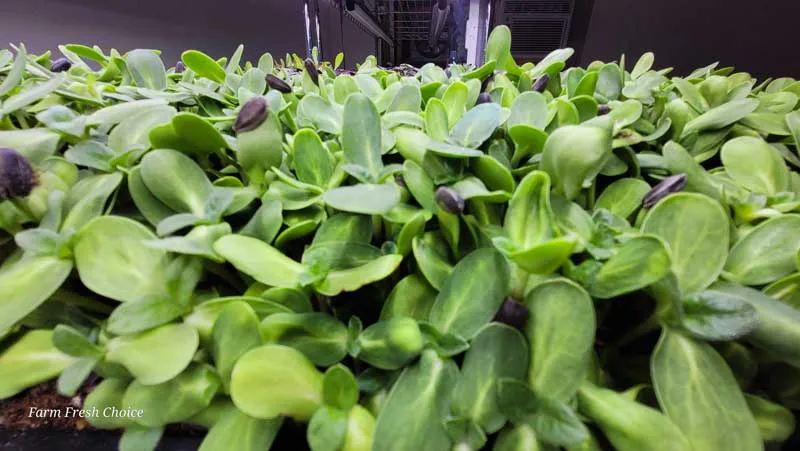
Understanding how to identify microgreens’ true leaves is essential for anyone looking to maximize the nutritional benefits and flavor of these tiny yet powerful plants. True leaves are a key indicator of a microgreen’s maturity, and recognizing them can help you determine the optimal time for harvest.
In this guide, we will explore what true leaves are, their growth timeline, and the characteristics that set them apart from the initial cotyledons. Additionally, we’ll provide insights on the best practices for harvesting microgreens to ensure you reap the most benefits.
What Are True Leaves?
True leaves are the second set of leaves that develop on a plant, following the initial seed leaves known as cotyledons. Unlike cotyledons, which serve primarily as a food source for the young seedling, true leaves are fully functional and capable of photosynthesis, allowing the plant to produce its own energy.
True leaves are usually more complex in structure, often resembling the mature leaves of the plant. The appearance of true leaves marks a critical stage in the growth of microgreens, as it indicates the plant is transitioning from its initial growth phase into a more advanced stage of development.
Growth Timeline of Microgreens
How long does it take for true leaves to appear when growing microgreens?
The growth timeline of microgreens varies depending on the type of crop being grown. True leaves typically appear within 8 to 12 days after germination. Initially, the seeds sprout cotyledons, the first leaves that are generally simple and uniform in shape. These cotyledons provide the necessary nutrients for the young seedlings to grow.
As the microgreens continue to develop, they enter the next stage where the true leaves begin to emerge. This process usually happens after the cotyledons have fully expanded and the plant has established a small root system.
The transition from cotyledons to true leaves signifies that the microgreens are maturing and ready to begin photosynthesis independently. Observing this timeline helps growers determine the optimal harvesting period based on the desired characteristics of the microgreens.
How to Identify True Leaves
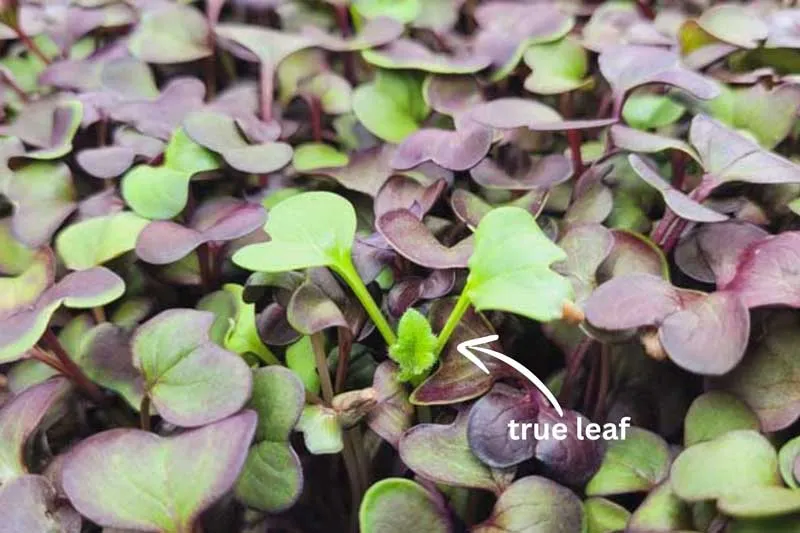
Identifying true leaves is essential for determining the right time to harvest microgreens. True leaves are more complex and detailed compared to the initial cotyledons. While cotyledons are generally round and simple, true leaves often resemble the mature leaves of the plant species, featuring distinct shapes and vein patterns.
By the time the fourth leaf emerges, you have the true leaves. These leaves are usually the second set of leaves to appear after the cotyledons.
So, what is the difference between true leaves and first leaves?
True and first leaves (cotyledons) differ in their structure and function. True leaves are capable of photosynthesis and are crucial for the plant’s continued growth and development. In contrast, cotyledons mainly serve as an initial food source for the seedling.
Harvesting Microgreens
Harvesting microgreens at the optimal time is crucial for maximizing their flavor, nutritional content, and overall yield. The decision to harvest before or after the true leaves appear depends on several factors, including the type of microgreen and the desired taste and nutritional profile.
Optimal Time for Harvesting Microgreens
Microgreens can generally be harvested once they reach the desired height, which is usually around 1-3 inches, except for pea shoots and sunflowers, which are harvested between 3 and 5 inches.
Harvesting can be done either before or after the true leaves appear. For many varieties, harvesting just before the true leaves emerge provides a stronger flavor and the most nutritional content.
Pros and Cons of Harvesting Before or After True Leaves Appear
Harvesting Before True Leaves Appear:
- Pros: Milder flavor, tender texture, quicker harvest time.
- Cons: Slightly lower nutritional content, less robust flavor.
Harvesting After True Leaves Appear:
- Pros: Higher nutritional content, richer flavor, increased yield.
- Cons: Slightly tougher texture, longer growth period.
Signs Indicating When to Harvest Microgreens
Key signs to look for when determining the right time to harvest microgreens include:
- Height: Microgreens should be between 1 to 3 inches tall for most crops.
- Yield: Check for a dense growth pattern with vibrant, healthy leaves.
- Flavor Profile: Taste a few samples to determine the preferred flavor.
- Nutritional Content: Harvesting after true leaves appear generally offers higher nutrient density.
Consequences of Waiting Too Long to Harvest
Waiting too long to harvest microgreens can lead to several issues. The plants may show signs of stress, such as wilting or yellowing leaves. The flavor profile can also change; for instance, microgreens like sunflower may become bitter.
Nutritional content may also decline as the plants use up stored nutrients. Therefore, monitoring the growth closely and harvesting at the optimal time is essential to ensure the best quality and nutritional benefits.
Recommended Content:
7 Best Microgreens for Dogs You Must Try