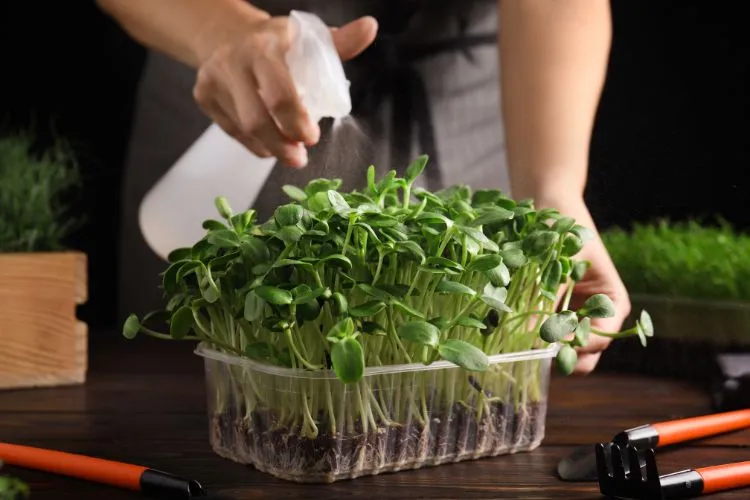
White fuzz on microgreens is a common problem; in many cases, it’s mold—not just root hairs. Mold can spread quickly and ruin entire trays, especially in high humidity and poor airflow. If you’re growing microgreens indoors, this risk increases. Under the right conditions, mold can form in less than 24 hours.
Growers often ask if hydrogen peroxide can stop the spread without harming the crop. Hydrogen peroxide is widely used to disinfect surfaces and kill spores, but using it on edible plants raises safety and effectiveness questions.
This guide gives clear, direct answers on whether 3% hydrogen peroxide can kill mold on microgreens, how it works, and the exact ratios to use safely without damaging your harvest.
Understanding Mold on Microgreens
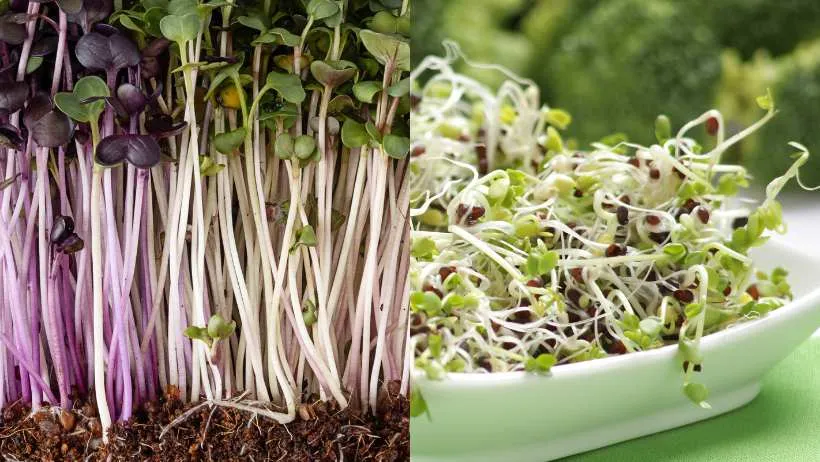
If you’ve noticed fuzzy white growth on your microgreens, it’s easy to assume it’s all mold—but not so fast. Microgreens naturally grow fine, white root hairs, especially during the early stages. These hairs are short, evenly spaced, and cling closely to the root line. Conversely, mold appears as a loose, irregular fuzz that may spread across the soil or leaves. It often carries a musty smell and may be accompanied by a slimy texture.
Mold usually shows up when moisture levels are too high, and airflow is too low. Overwatering, poor drainage, high humidity, or a lack of ventilation can all invite mold growth. Seeds that sit too close together without enough room to breathe can also create the perfect environment for fungal issues.
You might spot it first on the soil’s surface or where stems meet the growing medium. If left untreated, mold can spread fast and threaten your entire tray. That’s why it’s important to recognize it early and act quickly. Once you’ve confirmed it’s mold and not root hairs, you can move on to treatment options that won’t risk your microgreens or health.
Can You Use Hydrogen Peroxide on Microgreens?
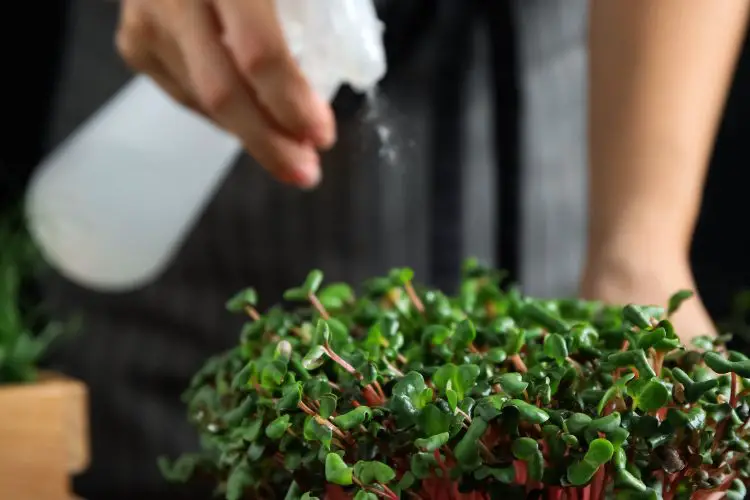
Hydrogen peroxide can be used on microgreens, but you must be cautious. It’s a common household disinfectant, and when diluted properly, it helps control mold without leaving behind toxic residue. The key is using the right type of food-grade hydrogen peroxide. This version is free from stabilizers and additives found in industrial or cleaning-grade peroxide, making it safer for use on edible plants.
While 3% hydrogen peroxide is widely available and often used in gardens, diluting it when spraying directly onto microgreens is still important. Overuse or high concentrations can cause leaf burn or slow growth. Hydrogen peroxide releases oxygen, which can disrupt mold spores and sterilize surfaces. However, too much oxygenation can harm tender sprouts.
If the wrong type is used, toxicological concerns can also arise. Industrial-grade peroxide contains stabilizers not meant for human consumption and can be dangerous if absorbed or ingested. Always check the label, and don’t assume all hydrogen peroxide products are created equal.
Does Hydrogen Peroxide Kill Mold?
Hydrogen peroxide kills mold by breaking down its cell walls. When it contacts mold, the solution releases oxygen, damaging the mold structure and stopping its growth. The bubbling effect helps clean the surface by lifting dirt and organic matter that mold uses to survive.
A 3% hydrogen peroxide solution works on surface mold. It can remove visible fuzz and clean affected areas. However, it may not reach mold spores deep in the growing medium. Mold can return if the environment stays wet or lacks airflow.
To treat mold on microgreens, mix 10 to 15 ml of 3% hydrogen peroxide with 1 liter of water. Spray the affected spots once a day. Do not use higher concentrations without testing on a small area. Stronger mixes can damage stems or roots.
How to Use Hydrogen Peroxide to Kill Mold on Microgreens
Start by identifying the best time to treat—early morning or late afternoon works well when temperatures are cooler, and the trays aren’t under direct light. Before spraying, mix your solution using 3% hydrogen peroxide diluted with water. A common ratio is 10–15 ml of peroxide per 1 liter of water. This is gentle enough for most microgreens but strong enough to act on surface mold.
Pour the solution into a clean spray bottle. Mist the affected areas lightly, focusing on the base of the stems and the growing medium’s surface where mold develops. Avoid soaking the leaves directly, especially on mature greens, as this could cause leaf damage. If you’re unsure how your plants will react, test on a small section first and wait 12–24 hours.
Spray once daily until the mold clears up, usually within a few days. During this period, keep airflow consistent—crack a window, turn on a fan, or raise the grow lid slightly. If trays are overcrowded, thin them to allow for better ventilation.
Alternatives to Hydrogen Peroxide
If you’d rather skip hydrogen peroxide, there are other ways to manage mold on microgreens—starting with prevention. Mold thrives in damp, crowded conditions, so spacing your seeds more evenly during planting can help. Good airflow is one of the best defenses. Use a small fan or keep your trays near a window with a light breeze to reduce moisture buildup.
Seed sanitation before planting also goes a long way. Soaking seeds in a mild citric acid or vinegar solution—about one teaspoon per cup of water—can help reduce mold spores on the seed coat. Just be sure to rinse them well after soaking to avoid slowing germination.
Some growers try vinegar sprays on mild mold, but it’s not as effective on spores and can leave a strong smell or damage tender greens. Vinegar lowers pH, which creates a less friendly environment for mold, but it doesn’t always kill it completely. It’s best used as a preventive rinse on trays between plantings rather than a treatment on living plants.
Helpful Microgreens Facts & Insight
How to Prevent Moldy Sunflower Seeds Growing Microgreens
Mold On Microgreens – A Guide On Preventing and Treating It
How to Start Sunflower Microgreens on a Countertop or Windowsill
How to Grow Sunflower Microgreens in Just 7 Days — Even With a Full Schedule
3 Simple Supplies You Need to Grow Sunflower Microgreens at Home